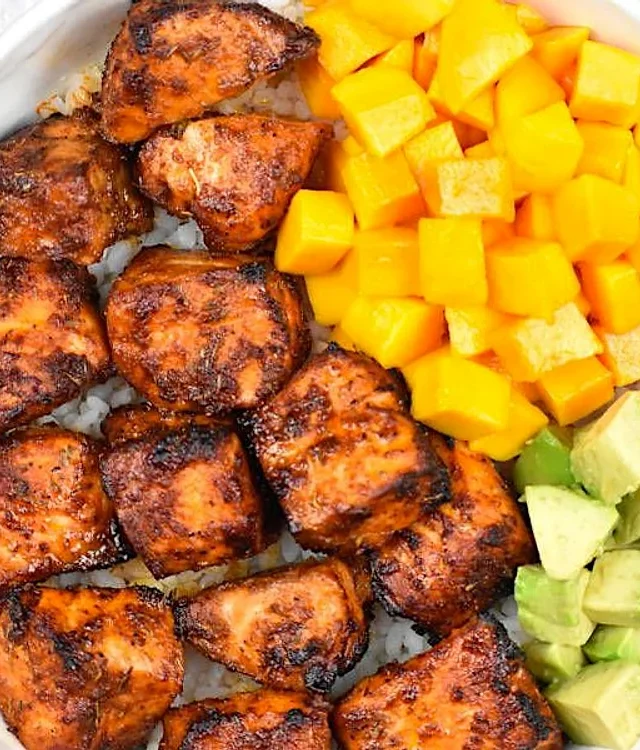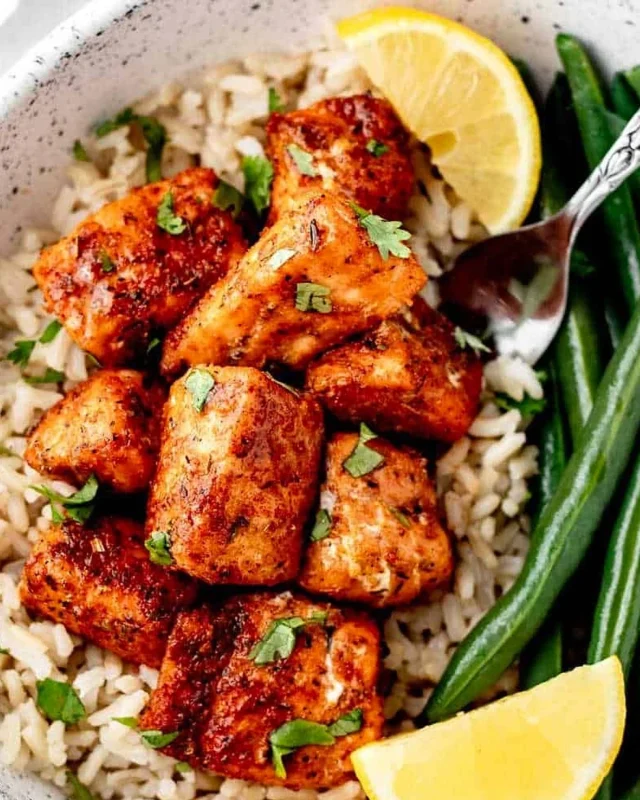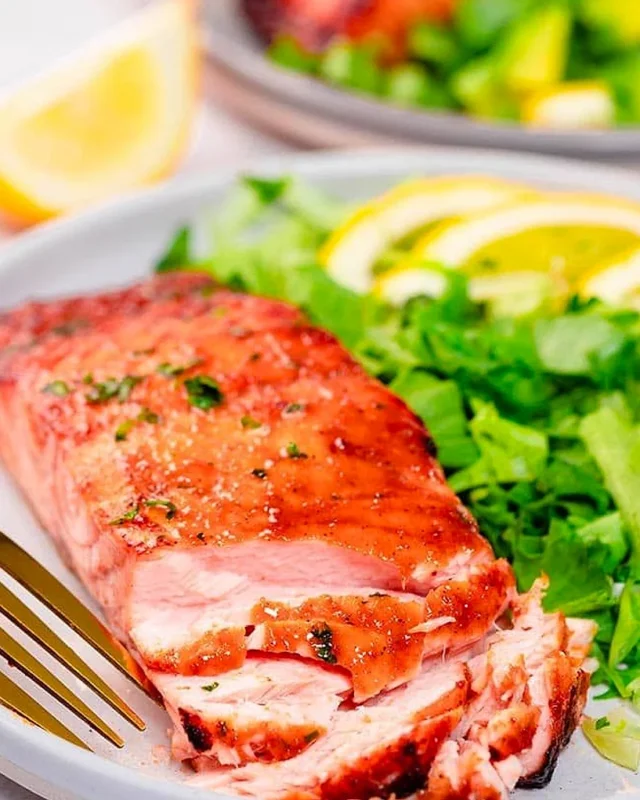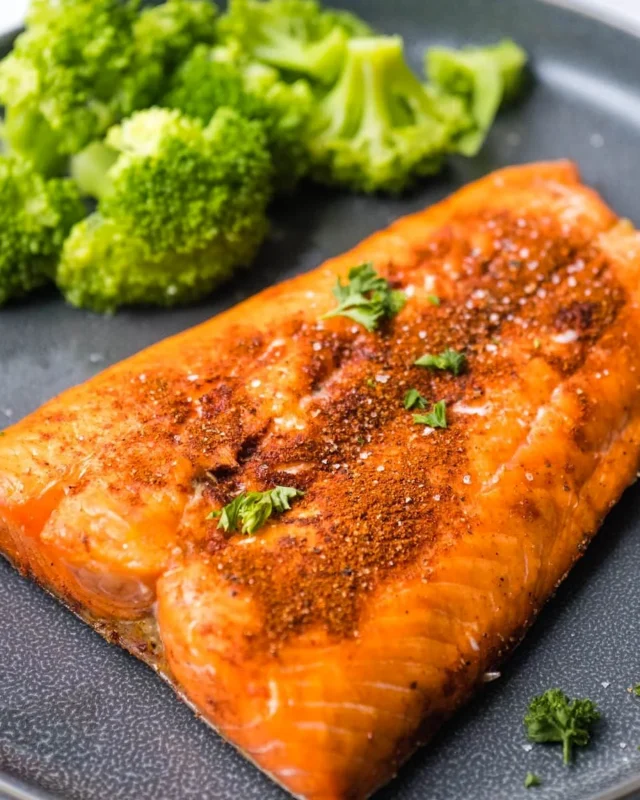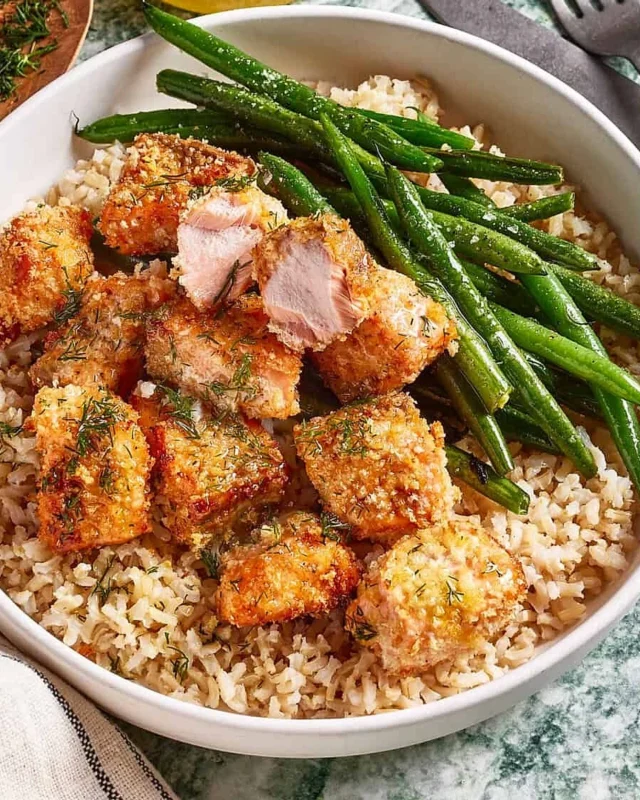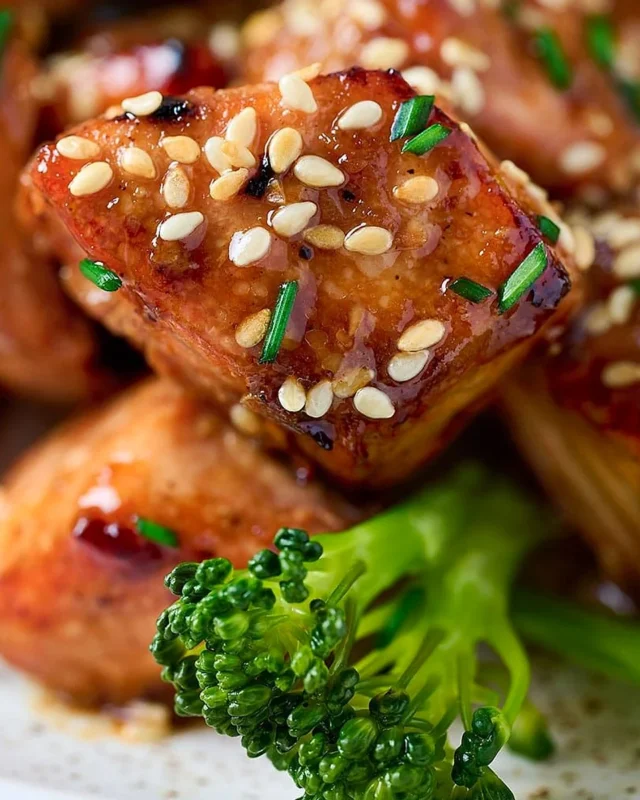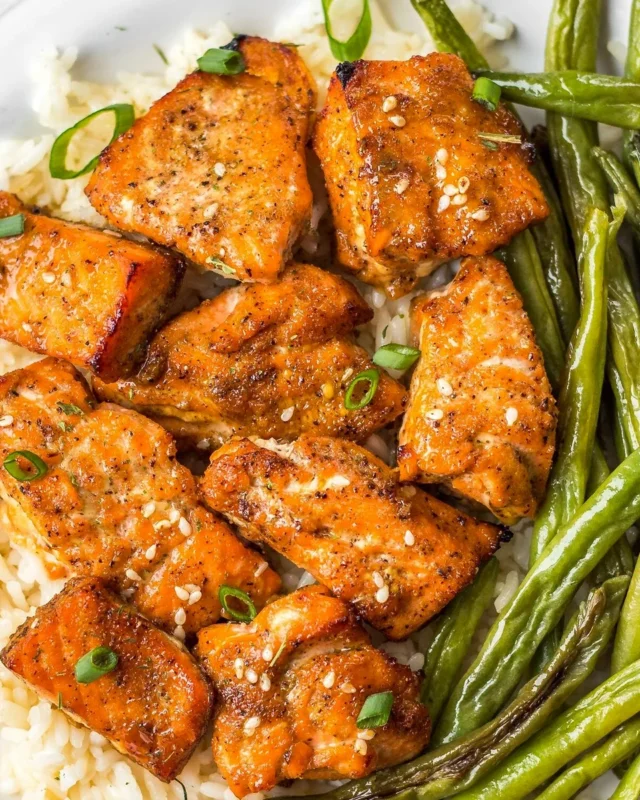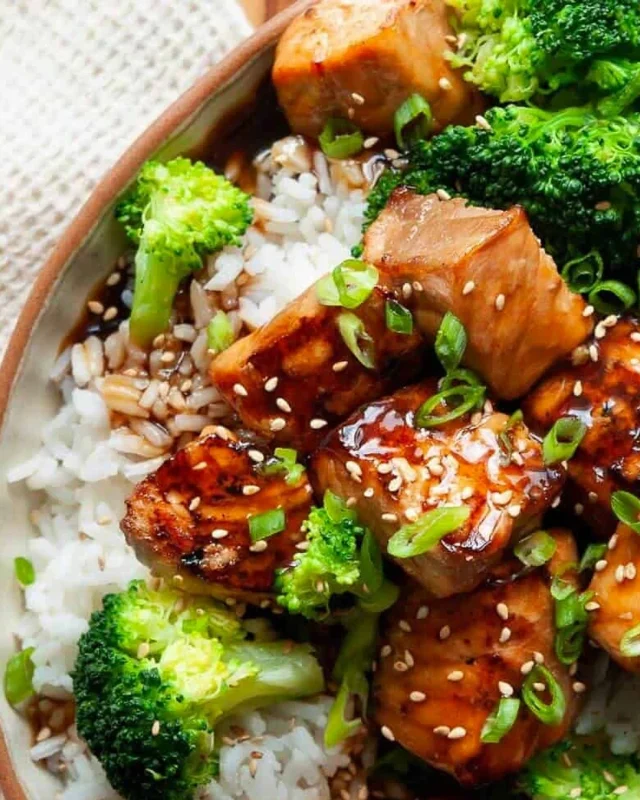
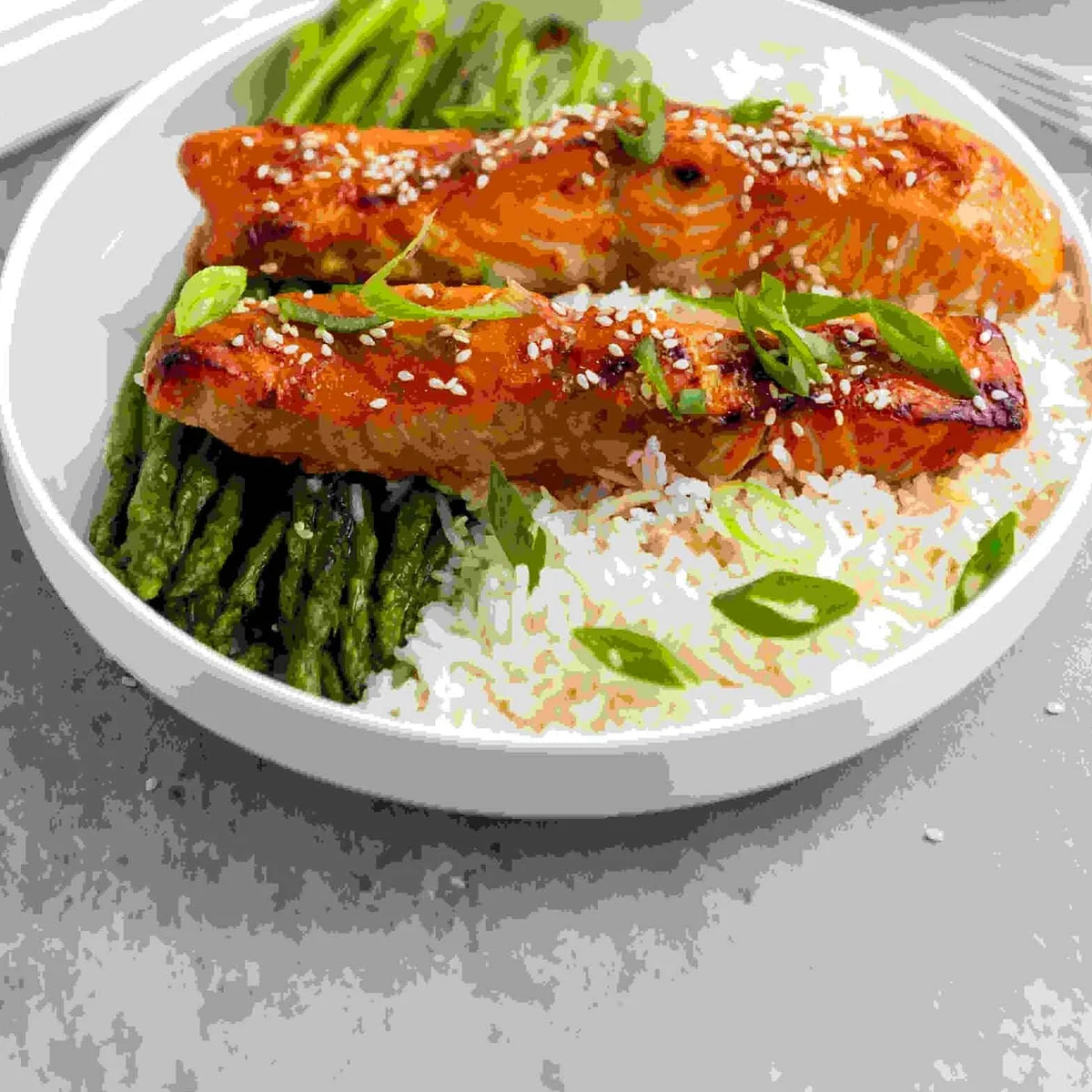
This air fryer teriyaki salmon is glossy, sweet, and savory, with edges that turn lightly caramelized while the center stays tender and flaky.
The homemade sauce comes together in one saucepan in about five minutes, using soy sauce, honey, ginger, and garlic.
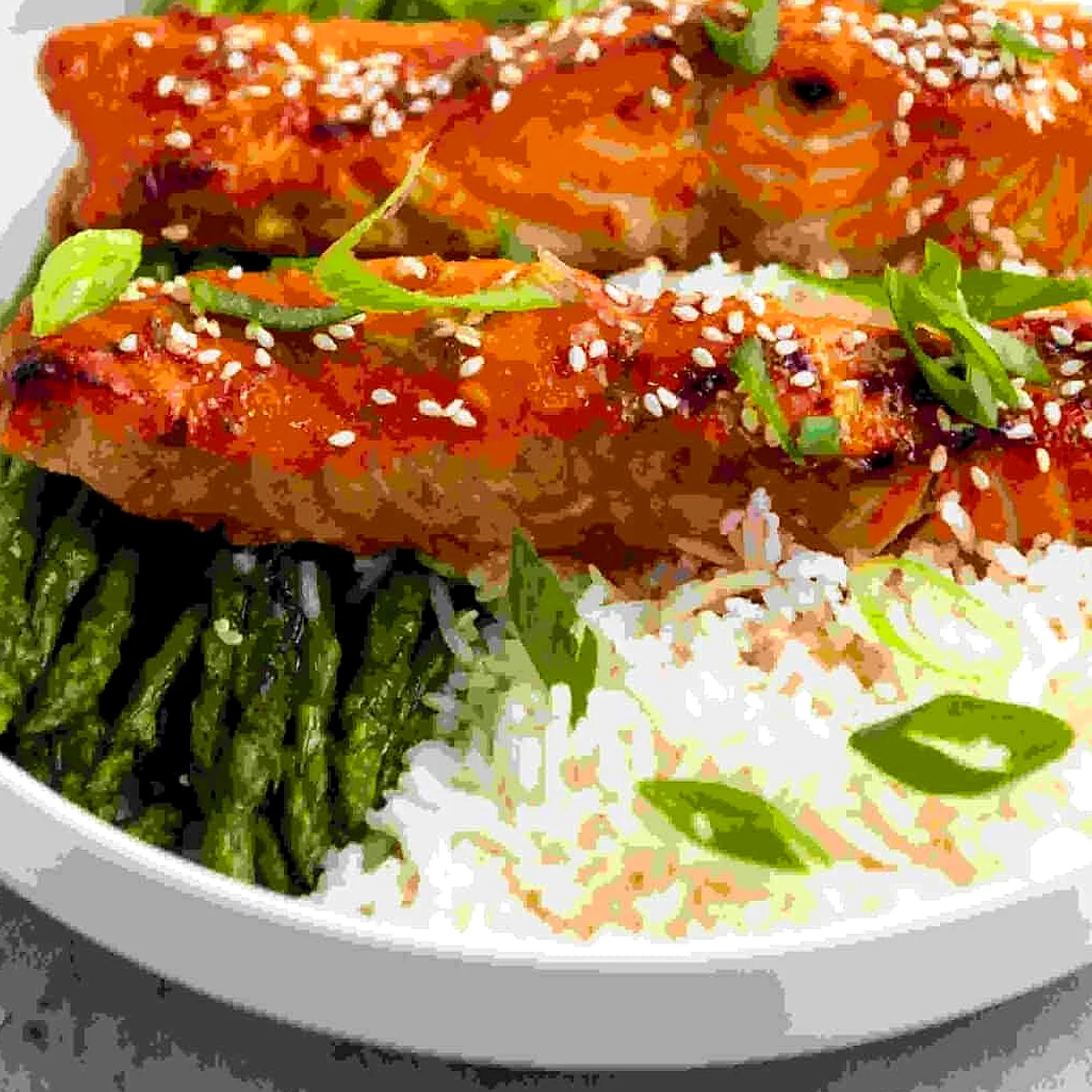
It is one of the fastest dinners we make on busy weeknights, and it needs only one pan of cleanup apart from the sauce.
Why you’ll love this recipe
We love how this salmon hits every craving at once: salty, sticky, and bright with fresh ginger. The air fryer gives you crisp-tinged edges without babysitting a skillet. It is a convincing answer to “what’s for dinner?” when you have twenty minutes.
Ingredients
Full quantities are in the recipe card below.
- Salmon fillets: the protein that cooks quickly and stays moist. Substitute with skinless trout fillets, adjusting time by a minute or two.
- Soy sauce: provides the salty backbone of the glaze. Substitute with tamari for a gluten-free version.
- Water: thins the sauce so it simmers evenly. Substitute with low-sodium chicken broth for more depth.
- Garlic: adds sharp, savory warmth that mellows as it cooks. Substitute with 1/2 tsp garlic powder in a pinch.
- Ginger: brightens the sauce and cuts through the sweetness. Substitute with 1/2 tsp ground ginger if fresh is unavailable.
- Honey: gives the glaze its shine and sticky texture. Substitute with maple syrup for a similar result.
- Brown sugar: deepens the caramel notes and helps the glaze thicken. Substitute with coconut sugar.
- Cornstarch: thickens the sauce into a glossy coating. Substitute with arrowroot powder, mixed the same way.
- Sesame seeds and scallion: add crunch and freshness as garnish. Substitute with chopped chives for the scallion.
How to make air fryer teriyaki salmon
Step 1: Make the teriyaki sauce
Combine soy sauce, water, garlic, ginger, honey, and brown sugar in a small saucepan. Bring to a gentle simmer over medium heat, stirring until the sugar dissolves.
Step 2: Thicken the glaze
Whisk the cornstarch with 1 tablespoon of cold water until smooth, then stir it into the simmering sauce. Cook 1 to 2 minutes until glossy and lightly coating a spoon. We thicken it separately so it does not clump.
Step 3: Dry and season the salmon
Pat the fillets dry with paper towels. Dry salmon browns better and absorbs less water from the glaze.
Step 4: Glaze and air fry
Brush half the sauce over the salmon and place it skin side down in a single layer in the basket. Air fry at 400°F (200°C) for 8 to 10 minutes, until the center flakes easily.
Step 5: Finish with more glaze
Brush the remaining sauce over the fillets during the last minute. This builds a sticky, lacquered finish without burning the sugar.
Step 6: Garnish and serve
Scatter sesame seeds and sliced scallion over the top. Serve right away while the glaze is still glossy.
Tips
- Pat it dry: Moisture stops the salmon from browning, so dry it well before glazing.
- Avoid overcrowding: Leave space between fillets so hot air circulates and the edges caramelize.
- Check doneness early: Salmon is ready at 125°F (52°C) in the center, so start checking at 8 minutes.
- Reserve some sauce: Keeping a little aside for the final brush gives a better shine.
- Use a parchment liner: Perforated parchment prevents sticking, but keep it weighed down by the fish.
- Grate the ginger finely: Fine grating releases more flavor and avoids stringy bites.
- Watch the sugar: Honey and brown sugar burn quickly above 400°F, so do not go hotter.
Storage
Refrigerate leftover salmon in an airtight container for up to three days. Store any extra sauce separately, since it thickens as it cools.
To reheat, warm the fillet in the air fryer at 300°F (150°C) for 3 to 4 minutes. This keeps the texture gentler than a microwave.
Variations
Spicy teriyaki salmon
Stir in a teaspoon of chili garlic sauce or a pinch of red pepper flakes into the glaze for gentle heat.
Salmon bowls
Serve the fillets over steamed rice with cucumber slices and shredded carrot for a complete meal.
Frequently Asked Questions
How long do you air fry teriyaki salmon?
Cook salmon fillets at 400°F (200°C) for 8 to 10 minutes, depending on thickness. The center should flake easily and reach about 125°F (52°C) for a moist texture.
Can I use frozen salmon for this recipe?
Yes, but thaw it fully in the fridge overnight first. Pat it very dry, since extra moisture from frozen fish dilutes the glaze and prevents browning.
Why is my teriyaki sauce not thickening?
The sauce needs to simmer after adding the cornstarch slurry. Stir for one to two minutes until it coats a spoon. It will thicken further as it cools.
What should I serve with air fryer teriyaki salmon?
Steamed white or brown rice, roasted broccoli, or sautéed green beans all pair well. The sauce is sweet, so something fresh and slightly bitter balances it nicely.
Is teriyaki salmon healthy?
Salmon provides protein and omega-3 fats. Using less honey and sugar and low-sodium soy sauce makes the glaze lighter without losing its flavor.
Air Fryer Teriyaki Salmon
 Recipe byChloe Martin
Ingredients
- 1 lb salmon fillets (4 pieces)
- 1/2 cup soy sauce
- 1/2 cup water
- 4 cloves garlic, minced
- 1-inch piece of ginger, grated
- 2 tbsp honey
- 2 tbsp brown sugar
- 1 tbsp cornstarch
- 1 tsp sesame seeds, for garnish
- 1 scallion, thinly sliced, for garnish
Instructions
- Combine soy sauce, water, minced garlic, grated ginger, honey, and brown sugar in a small saucepan.
- Bring to a gentle simmer over medium heat, stirring until the sugar dissolves.
- Whisk cornstarch with 1 tablespoon cold water, then stir into the simmering sauce and cook 1 to 2 minutes until glossy.
- Pat the salmon fillets dry and set them skin side down in the air fryer basket in a single layer.
- Brush half the teriyaki sauce over the salmon.
- Air fry at 400°F (200°C) for 8 to 10 minutes, until the center flakes easily.
- Brush the remaining sauce over the fillets during the last minute of cooking.
- Garnish with sesame seeds and sliced scallion and serve immediately.
Notes
- Use the leftover sauce for rice or vegetables; store it in the fridge for up to one week.
- Check the thickest part of the fillet early to avoid overcooking.